UNDERWATER MULTI-INFLUENCE MEASUREMENTS AS A MEAN TO CHARACTERIZE THE OVERALL VESSEL SIGNATURE AND PROTECT THE MARINE ENVIRONMENT

UNDERWATER MULTI-INFLUENCE MEASUREMENTS AS A MEAN TO CHARACTERIZE THE OVERALL VESSEL SIGNATURE AND PROTECT THE MARINE ENVIRONMENT

Publicado: 26/10/2017

MIRSThe overall signature of a vessel comprises acoustic, magnetic, electric-field, pressure and seismic radiations. Over the past years international community’s efforts have mainly centred on reducing the acoustic influence with the dual aim of decreasing the vessel detectability and reducing the level of acoustic pollution generated in the marine environment. Nowadays it is becoming increasingly clear the necessity of acting not only on the acoustic radiation but against the overall set of the vessel’s radiations, both in the military and the civilian fields, based on aspects such as the stealthiness of the vessels, the security of harbour and critical infrastructures and the environmental protection. As a key element to achieve this goal, it is greatly important to have at our disposal highly modular and adaptable measurement systems covering the overall set of vessel’s radiations, with a high capacity of data transmission to base centres in order to have the capacity of taken measurements in all kind of marine environments.

1. INTRODUCTION

All the vessels, independently of their shape and size, emit to the sea a set of radiations that make up the so-called vessel signature. This signature characterizes and identifies univocally the vessel in the same way that the fingerprint identifies the human being. The importance of this signature is well-known since early the past century, mainly in the defense field and specially centered on the so-called acoustic and magnetic signatures. As an example, detection of vessels based on their acoustic signatures had a great importance in the naval field during the Second World War.

In parallel with technological improvements during the 20th century, and especially in the defense field, specific techniques have been developed to get smaller the level of the radiations emitted to the sea by vessels. At the beginning, reduction techniques were limited to the acoustic radiation. Next, the magnetic radiation was also taking into consideration and more recently the electric-field, pressure and seismic radiations have also been considered of interest. The group of five radiations referred to above make up the so-called multi-influence signature of a vessel. In Figure 1 an example of the simulated electric signature radiated by a sweep gear is shown.

Simulación del campo eléctrico radiado por una rastra eléctrica
Figure 1. Simulation of the electric field radiated by a sweep gear

The monitoring of the multi-influence signature has a great importance in the defense field and in the case of vessels such as submarines becomes a matter of survival. Also, it is becoming increasingly important in the civilian field related to the marine environment preservation, especially in the case of the marine fauna living in this environment, due to the influence of these radiations on their behaviour. Finally, it is worth to outcome that the detection of this signature permits us to determine the presence of threats in harbours/ports, critical infrastructures or cultural assets located on the sea floor, making it possible to implement specific actions to neutralize these threats.

This paper comprises four sections in addition to this introduction section: in the first section the main characteristics of the radiations that make up the multi-influence signature are described. In the next two sections, the importance of this signature in the defense and civilian fields is analyzed. In the next section, a system especially adapted to measure multi-influence signatures is described. Finally, the paper is completed with the conclusion of the study.


2. CHARACTERISTICS OF THE MULTI-INFLUENCE SIGNATURE OF A VESSEL

As previously stated, the multi-influence signature of a vessel comprises five types of radiation: acoustic, magnetic, electric, pressure and seismic. Each of them incorporates specific characteristics. Next, a brief description of their main characteristics is presented.

Acoustic radiation

The sound generated by a vibrating source is propagated as a wave in an elastic medium such as the sea, originating pressure changes that are susceptible of being measured.

The underwater sound propagation characterises by its high performance, being in fact the way of radiation today known that best propagates through this medium [1], being able to reach long distances in the case of low frequencies.

Vessels emit two types of generic signals: broadband and narrowband. The former characterises by covering a wide spectrum of frequencies, meanwhile the latter is limited to a narrow spectrum.

There are different sound sources in vessels. The three main are: machinery noise, propeller noise, and hydrodynamic noise. In Figure 2 a scheme of sound underwater propagation obtained from an underwater acoustic propagation model is shown.

Caminos de propagación submarina del sonido obtenidos mediante un modelo de propagación
Figure 2. Sound underwater propagation paths obtained from an acoustic propagation model

Magnetic radiation

The ship magnetic influence is composed by two components: the static component (SM) and the alternating one (AM). The static component is generated by the permanent and induced magnetic fields.

The permanent magnetic field of the ship is due to the magnetization of its construction magnetic materials by the Earth’s magnetic field. Besides, the Earth’s magnetic field, as an extern magnetic field, always contributes to the ship magnetic signature. This component depends on the ship course and localization of the area.

In addition to permanent and induced magnetic fields, CRM (Corrosion Related Magnetic) field also contributes to the static magnetic component of the signature. This field is due to the existence of corrosion currents through the sea water, which have an associated magnetic field.

The alternating component of magnetic signature is generated by:

  • The currents in the rotating coils of ship turbines. These coils perform as magnetic dipoles, which generate AC magnetic signature.
  • Sea water Foucault currents induced by the magnetic dipoles. These currents are time varying and are associated also with alternating electric fields.
  • Electric currents flowing through ship hull due to electric equipment failures or inadequate design.
  • Inherent magnetic field radiated by any rotating electric machinery in the ship.


Besides, power supply ripple generates alternating currents through the water. In Figure 3 an example of simulation of the magnetic field generated by a vesselis shown.

Simulación de campo magnético generado por un buque
Figure 3.Simulation of magnetic field generated by a vessel

Electric-field radiation

The ship electric signature is composed by two components: the static component UEP (Underwater Electric Potential) and the alternating component ELFE (Extremely Low Frequency Electric).

The static component UEP represents the near field influence and its temporal variation depends on speed and size of the ship. The static electric signature of a ship is due to the electric currents generated by the galvanic corrosion process. In order to avoid this corrosion, cathodic protection systems are used. There exist two types of cathodic protection systems: passive and active or ICCP (Impressed Current Cathodic Protection). The passive systems use sacrifice anodes, whereas active systems use impressed current anodes and reference electrodes. Quite often, cathodic protection systems contribute drastically to electric signature and constitute the main generator for this influence.

The alternating component ELFE covers a bandwidth of approximately 3 kHz and represents the near and far field influence. ELFE component is due to the following factors:

  1. Modulation of the corrosion current: galvanic current is modulated due to the spin of blades and propellers.
  2. Ripple in machinery power supply of the ship. It appears a tone of frequency corresponding to the power supply frequency.
  3. Ripple in degaussing systems ICCP, corresponding to the modulation suffered by the ICCP system current due to variations in the resistance between the shaft and hull of the ship.


In Figure 4 is shown an example of simulation of the electric signature radiated by a vessel.

Figure 4. Example of simulation of the electric signature radiated by a vessel (componentes longitudinal, transversal y vertical)


Pressure radiation

Hydrostatic pressure due to water depth varies slowly with atmospheric pressure changes and tide rising and falling. Besides, it can vary fast with waves and train of waves, or with a ship.

Pressure variation due to a ship movement is usually very small. This small variation constitutes the ship pressure signature and it is produced by Bernoulli Effect of the water flowing from bow to stern. This flow originates a pressure increase at bow and stern of the ship and a decrement in the central zone (suction), which peak is directly proportional to ship speed and its underwater shape. Figure 3, shows this pattern in a simulation of the pressure signature of a ship.

Therefore, induced pressure fluctuations by the ship superpose with the nominal static pressure of the bottom and natural disturbances caused by tide, waves and swells.

Simulación de la firma de presión de un buque
Figure 5. Ship Pressure Signature Simulation


Seismic radiation

Seismic influence is generated by the same sources as for the acoustic influence. When an acoustic wave reaches a surface, the majority of the energy is reflected but a percentage is absorbed by the new medium.

Thus, acoustic signals of very low frequency (below 10Hz) propagate up to the sea floor and transmit through it as a seismic perturbance. This type of perturbance travels much faster through sea floor than through sea water.

From this seismic point of view it is obvious that the acoustic energy penetrating into the sea floor may sometimes contribute considerably to medium-range and long-range acoustic transmission. One clear example that shows seismic influences behavior is the existence of a critical frequency. For all frequencies below this limit absorption phenomena in incident waves appears, and this phenomena depends on characteristics of the materials and layers of the see floor.

Esquema de propagación submarina de la firma sísmica de un buque
Figure 6. Ship seismic signature physic phenomena


3. THE MULTI-INFLUENCE SIGNATURE IN THE DEFENSE FIELD

The intelligence databases have become an element of great importance for the navies of the different countries. These databases contain as distinctive data the signatures of the vessels. At the beginning they contained acoustic data and sometimes magnetic data. Currently, they seek to incorporate also data corresponding to the rest of influences. These databases permit us to discriminate not only the type and class of the vessel but also the specific unit of the class, providing a considerable tactical advantage.

Currently, the trend of the last decades relative to the reduction of the vessels signature is being accentuated. This trend is particularly intense in the case of submarines. They seek to increase their level of protection becoming every time more stealth vessels as a mean to counter-act the development of increasingly intelligent weapons such as last generation torpedoes. In Figure 7 an image of type U-206 submarines is shown.

In parallel with that stated above, every time more sophisticated systems incorporating a wide range of sensors are being developed nowadays. The use of these multi-influence systems permits vessels to increase significantly their detection capacities from the combination of the data provided by their suite of sensors, making it possible a considerable reduction in the number of false alarms.

By other hand, in the defense facilities protection field the use of these multi-influence sensors is permitting to increase their security in a significant way. This fact is based on the early and more accurate detection of the threats coming from the marine environment, such as: divers moving autonomously, manned and unmanned underwater vehicles (SDV, ROV, UUV), mini-submarines, etc.

Submarinos de la clase U-206: A.R.C Intrépido y A.R.C Indomable
Figure 7. Submarines of the U-206 class: A.R.C Intrépido y A.R.C Indomable

4. THE MULTI-INFLUENCE SIGNATURE IN THE CIVILIAN FIELD

During the last years, a growing awareness has emerged worldwide on the necessity of protecting the marine environment, especially from the human activities such as: fishing, sailing, harbour works or seismic oil and gas explorations that convey significant increases in the level of a range of pollutants such as acoustic noise and other sources or energy including theelectric and magnetic ones.

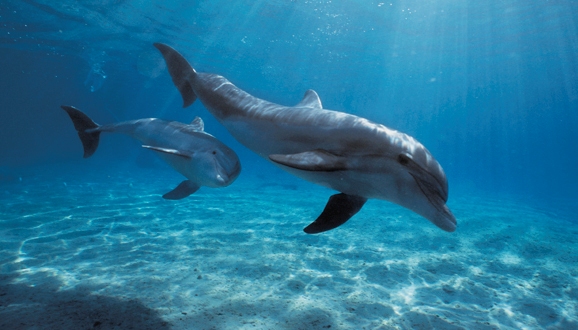
This growing awareness has entailed the development of a range of national and international regulations focus to get an effective preservation of the marine environment. Among these regulations is the Marine Strategy Framework Directive, promulgated by the European Union in the year 2008, which introduces a set of qualitative descriptors to determine the good environmental status. One of these descriptors states that: “The introduction of energy, including underwater noise, is at levels that no adversely affect the marine environment”. The effective application of this Directive, and of other regulations related with the marine environment protection, implies both the measurement of the level of the energy radiations emitted to the sea [2] and the detection of the marine fauna presence in specific areas on which high energy levels are detected, with the aim of protecting this fauna from the potential harmful effects of theradiated energy.This detection is mainly based on acoustic sensors, although other alternative detection means are currently being analyzed, such as the detection of the marine fauna based on the alteration of the underwater electric or magnetic fieldsoriginated by its presence. In Figure 8 two kinds of cetacean species: bottlenose dolphin and sperm whale are shown. Both are endangered species.

Just like in the defense field, the use of multi-influence sensor systems provides an effective protection of harbours and critical infrastructures, such as oil refineries and thermal power stations, against hostile intruders. This protection can also be extended to other fields of remarkable interests as is the case of marine reserves, ship wrecks or underwater archaeological remains.

Especies de cetáceos: delfín mular (izquierda) y cachalote (derecha)
Figure 8. Species of cetaceans: bottlenose dolphin (left) and sperm whale (right)


5. MULTI-INFLUENCE SIGNATURE MEASUREMENTS

With regards to multi-influence measurements, the trend in the civilian field is to advance towards a standardisation process in the procedures and parameters of the measurements. These standards already exist since time ago in the defense field. The precursor of this process is again the acoustic influence for which a standard has recently (2009) been developed by the Acoustical Society or America (ASA): “Quantities and Procedures for Description and Measurement of Underwater Sound from Ships”. Additionally, in the European Union scope there exist specific programs focused to the definition of a European standard. Measurements are usually normalised to common references in order to be able to compare these coming from different systems, as is the case of the 1-meter from the source reference for acoustic measurements or a common reference point for all the vessels in the case of electric and magnetic fields measurements.

The fact that multi-influence sensors provide different detection ranges permits us to establish different detection layers as a function of the sensor range, Detection ranges depend on both the specific characteristics of the marine environment and these ones of the vessel under test and the used sensors. In a first approach, it can be stated that both acoustic and seismic sensors provide detection distances in the range of kilometers, being the seismic sensor especially dependent on the characteristics previously referred to, electric-field and magnetic sensors in the range of hundreds of meters and pressure sensors in the range of tens of meters.

The wide range of operational environments in which multi-influence measurements are susceptible to be taken makes highly advisable to have at our disposal modular and portable systems with small dimensions and weights. These kinds of systems permit us their deployment and recovery in different marine areas within a reduced time interval and without requiring complex means. Other aspects to be stressed are: the capacity of data transmission to base centers (located on shore or onboard vessels) with an adequate bandwidth to cover the characteristics of the signatures under test and the capacity of storing and processing the measured influences, focused to provide accurate and useful information to the system operator.

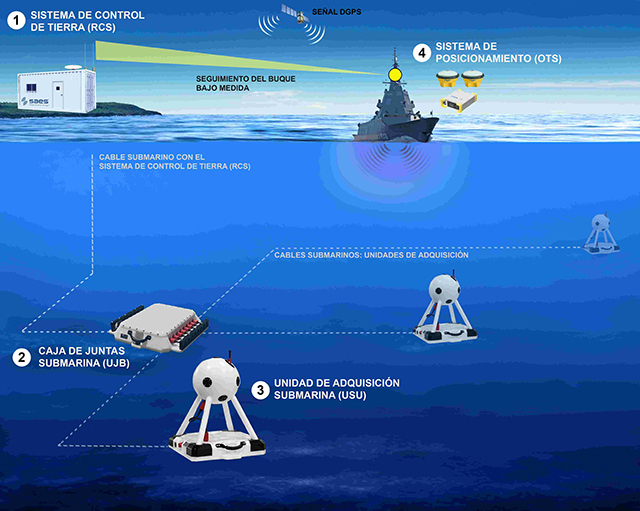
As an example of a system that complies with the characteristics previously described is found the MIRS system developed by SAES (see underwater units deployed on the sea bottom in Figure 9).

Unidades submarinas del sistema de medición multi-influencia MIRS desarrollado por SAES
Figure 9. Underwater units of the multi-influence measurement system MIRS developed by SAES


The MIRS system has been tested in operational environments showing its versatility,ease of use and accuracy taken as reference calibrated systems. In Figure 10 graphic outputs of the multi-influence signature of a merchant vessel are shown.

Conjunto de medidas de la influencia acústica (superior izquierda), sísmica (superior centro), magnética (superior derecha), eléctrica (inferior izquierda) y de presión (inferior derecha) de un buque mercante medidas con el sistema MIRS desarrollado por SAES
Figure10. Set of measurement of the acoustic (upper left), seismic (upper middle), magnetic (upper right), electric (lower left) and pressure (lower right) influences of a merchant vessel taken by the MIRS system developed by SAES

6. CONCLUSION

All vessels when sailing through the sea radiate a set of influences (acoustic, magnetic, electric, pressure and seismic) that make up their multi-influence signature. Some of these influences (acoustic and magnetic) have being measured since decades ago to characterise the vessels in the defense field and to monitor the acoustic pollution in the civilian field. Recently the interest in the international community on having at our disposal the overall signature of the vessels has emerged, with the aim of evaluating globally its impact on the marine environment.

In the defense field, from the point of view of the own fleet to have at our disposal multi-influence data from vessels permits us to perform specific tasks and studies focused to reduce the own signature in order to decrease the probability of being detected. By other hand, from the point of view of the threats this data permits us to characterise the vessels signature with the aim of increasing our capacity to detect them.

In the civilian field, the interest is centered on the marine environment preservation, especially of its marine fauna. In the dual defense-civilian field, protection systems based on multi-influence sensors constitute a highly efficient mean to detect hostile intruders.

Due to the variety of operational areas in the marine environment it is highly advisable to have at our disposal modular systems with contrasted capacities of data transmission, recording of the measurements and processing focused to provide relevant information to the system operator. The MIRS system developed by SAES configures as a verified and in-service system than complies with the requirements established for the multi-influence measurement of all kind of platforms or naval devices in the whole spectrum of operational environments.

REFERENCES

[1] R. J. Urick. Principles of Underwater Sound.McGraw-Hill (1993).

[2] W. J. Richardson, C. R. Green, C. I. Malme, D. H. Thomson. Marine mammal and noise. Academic Press Inc. (1995).

Participation in national and international consortia

SAES is a member of the consortium selected under the European Defence Agency (EDA) call for tender focused on Advanced Materials for Acoustic Signature Management (AMASM).

The successful proposal was submitted by a consortium of Spanish organisations coordinated by the Naval Technology Centre (CTN). Phase 1 of the contract covers a 12‑month period and includes the following activities:

  • Assessment of the technological landscape
  • Definition and selection of defence-sector use cases
  • Requirements definition, prioritisation, and the specification of an AMASM proof of concept for a laboratory environment (up to TRL 3)

SAES’s contribution to the AMASM project is primarily focused on the Work Package dedicated to Roadmap Definition, where it leads the task of identifying and defining use cases within the defence sector. In addition, SAES contributes across the remaining work packages, particularly in the Proof of Concept simulation activities.

SAES is part of the consortium responsible for delivering the NEREUS project, selected under the European Defence Fund (EDF) 2024 call. The consortium is composed of 24 organisations from one country and is led by Navantia. The project has a duration of 42 months and commenced in November 2025.

The objective of NEREUS (Naval System of Systems and Integrated Survivability of Future EU Platforms) is to establish the foundations for intelligent naval system-of-systems concepts for future European maritime platforms. These platforms are expected to operate in a fully integrated and interconnected manner within multi-domain environments, with a strong emphasis on survivability.

SAES’s contribution to the NEREUS project focuses on several key areas, including underwater sensors, underwater communications, signature management, combat cloud technologies and digital twin capabilities.

SAES has been selected by the Regional Development Institute of Murcia (INFO) to deliver a solution to the challenge CAETRA 2024-01 – Intelligent Control of Underwater Pollution, set by the Port Authority of Cartagena (APC), within the framework of the INFO grants for open innovation in the fields of Defence, Security, Reconstruction and Development under the CAETRA programme.

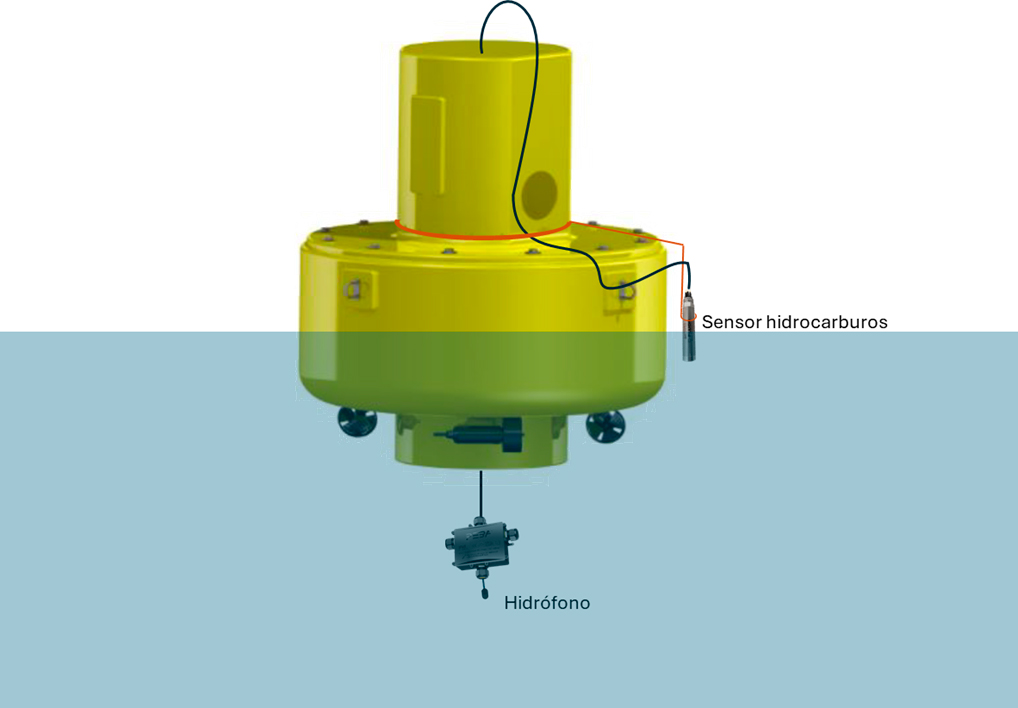
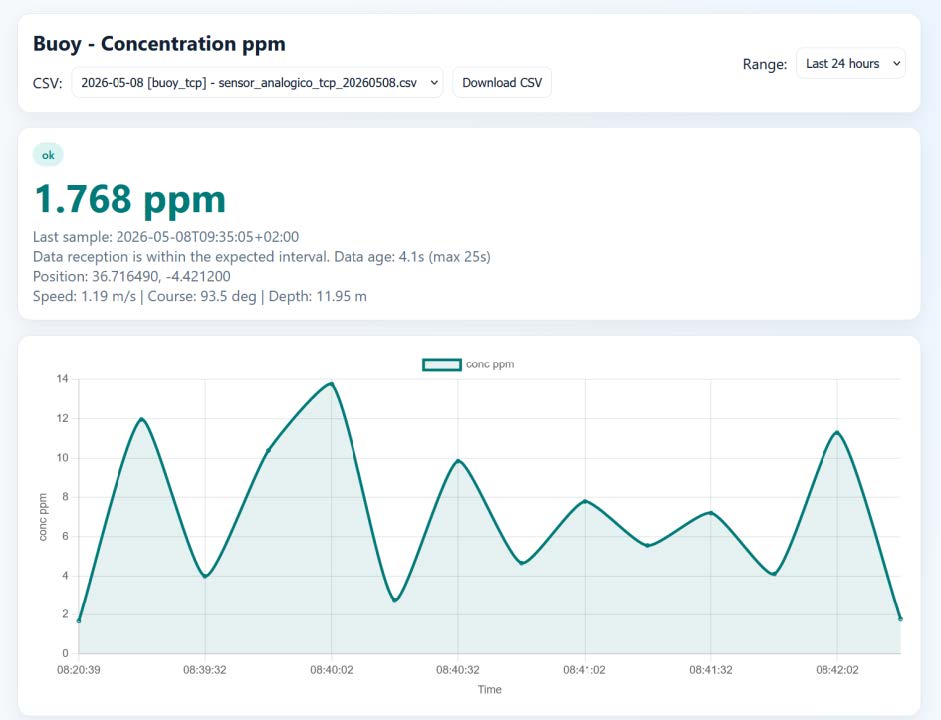
SIMBAAD (Smart Marine Monitoring System Based on an Advanced Buoy) aims to implement and carry out at-sea trials (in a port environment) of an intelligent buoy integrating multiple sensors for the real-time monitoring and control of acoustic, electric, magnetic and chemical pollutant emissions in the marine environment. The project contributes to biodiversity protection and supports compliance with the European Marine Strategy Framework Directive.

The project began in May 2025 and is scheduled for completion in May 2026.

SAES ha participado como miembro del consorcio que ha desarrollado el proyecto BLUESIM seleccionado en la convocatoria de 2023 del PERTE del Sector Naval del Ministerio de Industria, Comercio y Turismo.

El consorcio está integrado por 5 entidades nacionales y coordinado por la empresa Clue Technologies. Su fecha de finalización ha sido junio de 2025

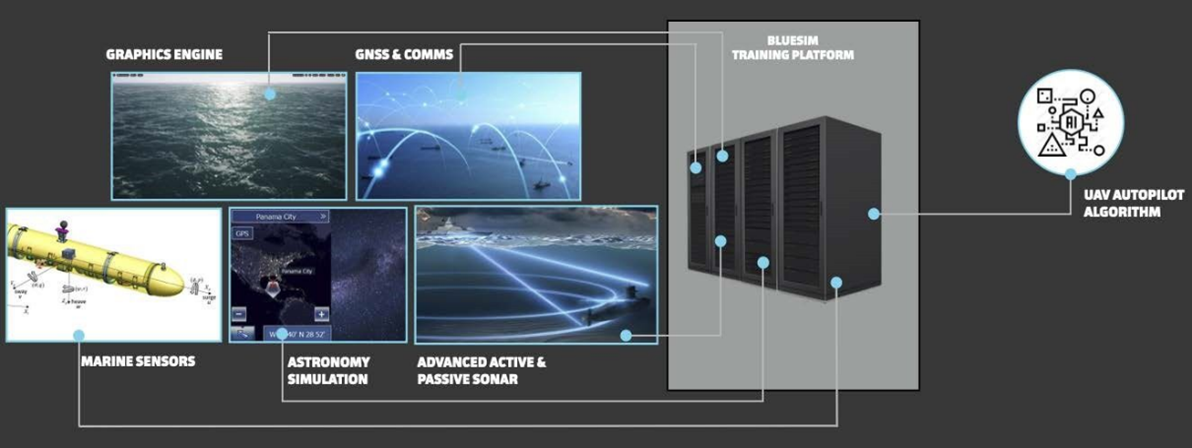
BLUESIM (Synthetic Training Platform for Autonomous UxVs) focuses on the research of a new type of training architecture for Artificial Intelligence (AI) systems based on deep learning. The project targets two initial applications: the characterisation of a synthetic marine environment for deep learning and the representation of Unmanned Surface Vehicles (USVs) and Unmanned Underwater Vehicles (UUVs) with synthetic systems.

SAES lidera dos paquetes de trabajo dentro de este proyecto, relativos a: Caracterización del entorno acústico marino, en el que simula el entorno acústico adaptado a las condiciones del escenario de operación de los UxVs y Modelo de simulación de sensores acústicos y sus interfaces en el que simula un Sonar de Barrido Lateral (SBL) y un sonar de visión frontal. Además participa en otros paquetes de trabajo relativos a actividades como definición de requisitos, definición de la arquitectura del sistema e integración y pruebas del sistema completo.

SAES is a member of the consortium delivering the European E=MCM project, selected under the European Defence Fund (EDF) 2023 call. The consortium brings together 21 organisations from 11 countries and is led by Naval Group Belgium.

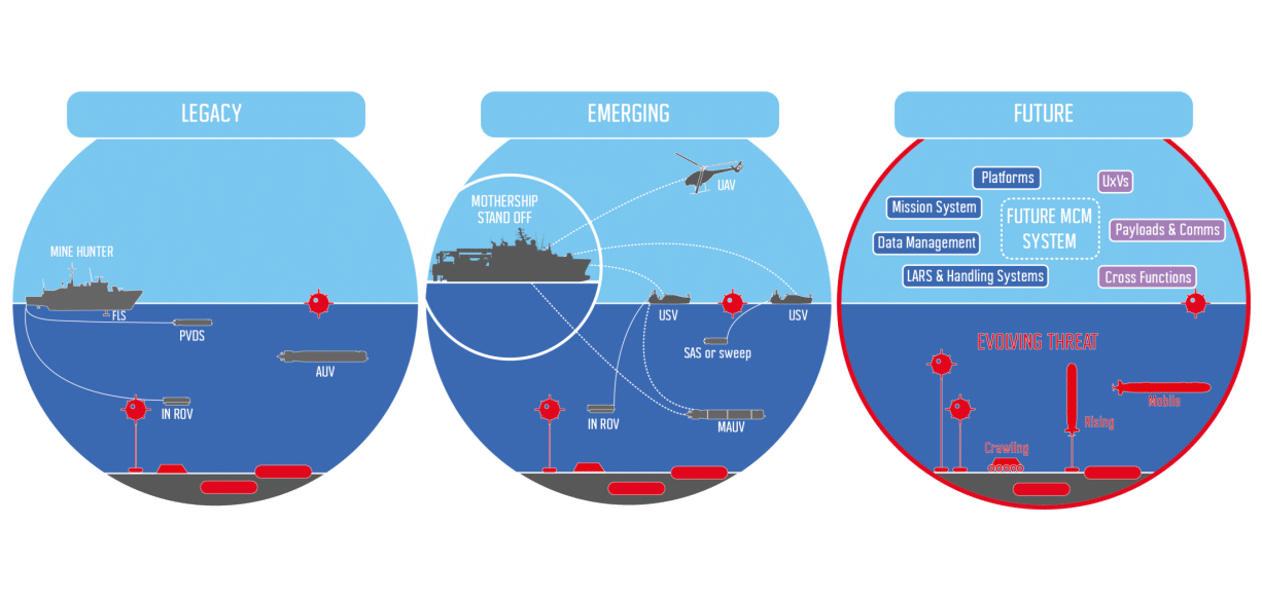
The project focuses on the Mine Countermeasures (MCM) domain and builds on the results achieved in its predecessor, MIRICLE (2021–2023), in which SAES also participated.

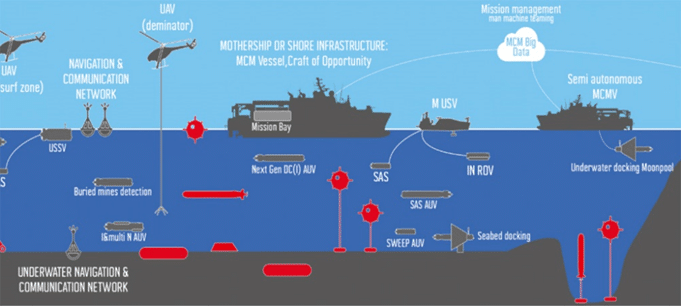
Diagram

The objective of E=MCM is to develop a system-of-systems architecture comprising advanced, scalable toolboxes of autonomous vehicles and intelligent platforms, alongside decision-support functions, to address mine threats, particularly drifting, moored and buried mines.

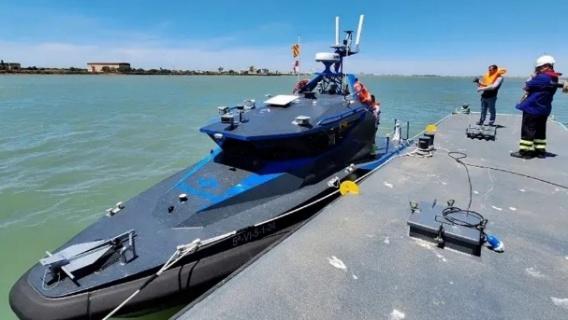
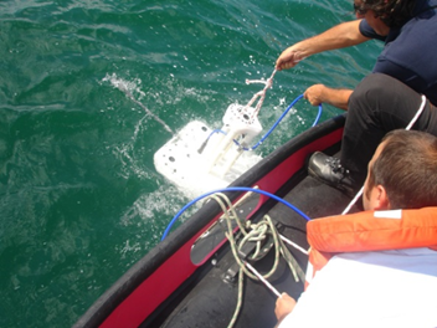
SAES’s contribution to the project is primarily centred on the development and at-sea testing of a multi-influence minesweeping system, capable of generating acoustic, electric and magnetic influences, to be integrated into Navantia’s Viento-class unmanned surface vehicle (USV)

A group of people on a boat in the sea

In addition, SAES will develop a software tool for mine threat assessment and a system for reducing the electric and magnetic signatures of USVs. All these activities fall within SAES’s technological priority area of New Threats and Scenarios.

SAES has been selected by the Regional Development Institute of Murcia (INFO) to deliver a solution to the challenge Monitoring of Critical Road and Hydraulic Infrastructure (MIC), set by the Directorate-General for Security and Emergencies of the Region of Murcia. This initiative forms part of the INFO open innovation grants programme in the fields of Defence, Security, Reconstruction and Development, under the CAETRA framework.

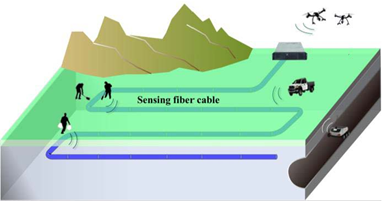
The objective of the project is to develop a prototype based on the use of fibre optic cables as sensing elements, enabling the monitoring of the structural condition of critical infrastructure, such as bridges, viaducts and dams.

The project began in July 2024 and is scheduled for completion in January 2026.

SAES has participated in the development of the European SONORA project since November 2022; it was selected in the JPI (Joint Programming Initiative) 2022 call Oceans: Underwater Noise in the Marine Environment. The project has a duration of three years.

SAES participates as an entity subcontracted by the University of Alicante (UA) and the Polytechnic University of Valencia (UPV), which are both part of the consortium in charge of developing the project in conjunction with three Italian entities.

SONORA (thresholds assessment and impact beyond acoustic pressure level linked to emerging blue-growth activities), undertakes the assessment of quantitative thresholds related to behavioural and physiological impacts on fish, based on the relationships between acoustic pressure and particle movement, to evaluate the impact both variables exert.

SAES’s role in SONORA focused on carrying out measuring campaigns of sound pressure levels and particle motions, as well as analysing the data gathered.

SAES is part of the consortium led by the Centre for Naval and Marine Technology (CTN) selected by the CINEA (European Climate, Infrastructure and Environment Executive Agency) to develop the tender CINEA/2022/OP/0019.

ECOSS (European Catalogue of Sound Signatures) is focused on developing an open library containing a verified and continuously expanding digital catalogue, alongside an AI-based classifier for individual underwater sound signatures in shallow water marine environments

The project began in September 2023, and its completion date was set for January 2025. The consortium is composed of seven entities from five European countries.

SAES’s participation focuses on data collection and the choice of the AI-based algorithms, as well as on their training and testing.

SAES is part of the consortium developing the ePark+ project, selected for funding in the 2022 Science and Innovation Missions call by the CDTI, and which was supported by the Spanish Ministry of Science and Innovation. In addition to SAES, the following entities make up the project’s consortium:

  • Navantia (Coordinator)
  • ABANCE
  • ARISNOVA
  • EOLOS
  • PERSEO TECH

Participating as sub-contracted entities: Technical University of Cartagena (UPCT), AICIA (University of Seville), and FIDESOL.

This is a collaborative project which will contribute to the technological development of offshore wind power. It began in December 2022 and completed in January 2025.

The ePark+ project is focused on research and development of different digital technologies for the Support of Operations and Maintenance (O&M) in offshore wind farms. The project seeks to obtain a technological demonstrator of a Smart System for this function making use of unmanned vehicles, as well as developing a prototype to show its operation in a relevant and controlled setting.

The system will consist of an Unmanned Surface Vehicle (USV), which will act as a mothership from which Unmanned Aerial Vehicles (UAVs) and Unmanned Underwater Vehicles (UUVs) will operate, as well as a remote-control centre where all the data received from the sensors on the unmanned vehicles will be centralised.

SAES’s contribution to the ePark+ programme focuses on underwater acoustic propagation and the surveillance of underwater infrastructures by means of sensors installed on the vehicles.

SAES’s participation in this project demonstrates the applicability of technology from the defence sector to the civilian sector, broadening the diversification of the applications of these dual technologies. In the field of unmanned systems, SAES is an expert in sensors in the field of unmanned vehicles to adapt them to other uses through the utilisation of artificial intelligence techniques..

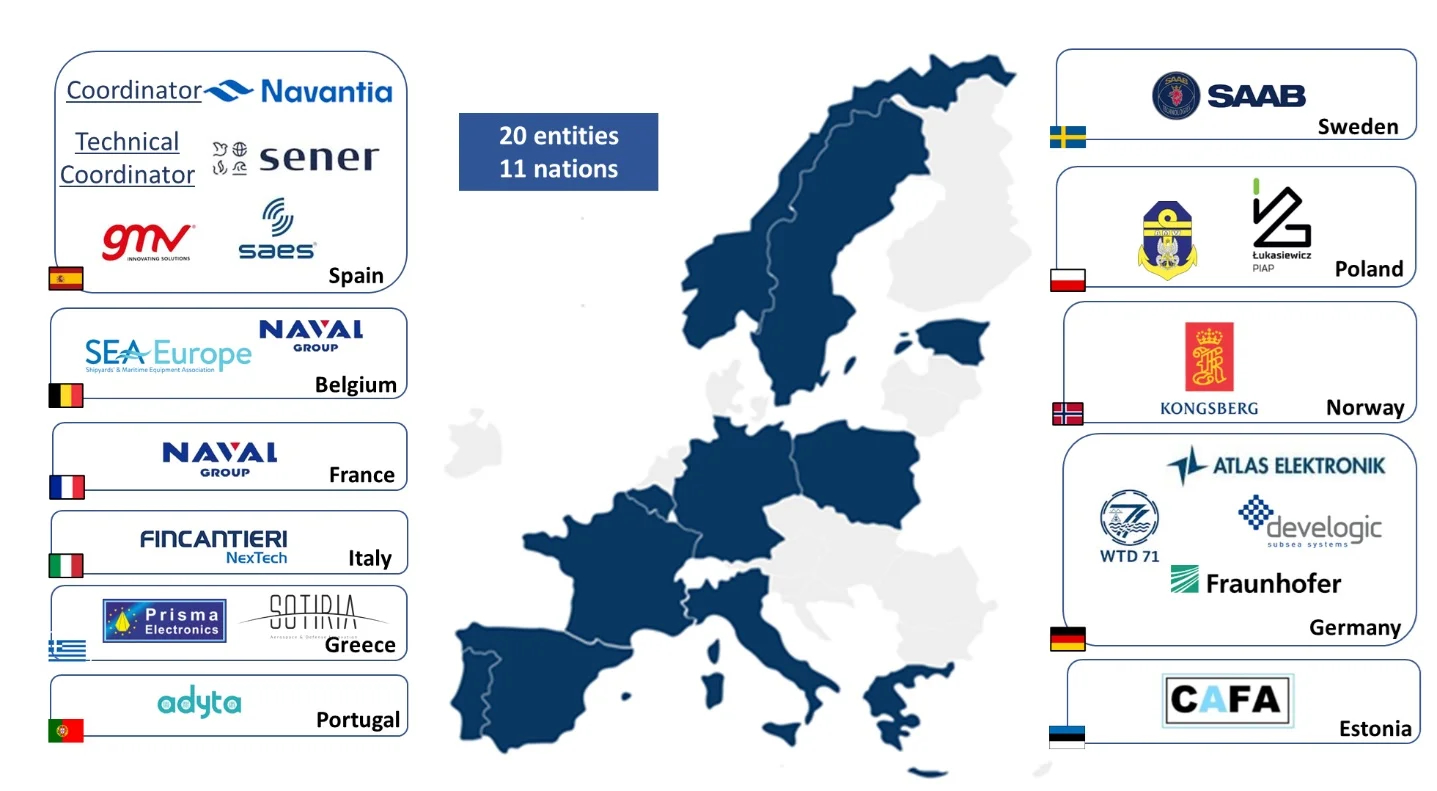
SAES is part of the international consortium developing the SWAT-SHOAL (Swarm and teaming operation of Manned & Unmanned Underwater Vehicle SHOAL) project, selected in the European Defence Fund (EDF) 2022 call in the area of Underwater manned-unmanned teaming and swarms.

SWAT-SHOAL, which began in December 2023, will run for 36 months. It its being developed by a consortium of 20 entities from 12 European countries, coordinated by the Spanish entity NAVANTIA.

The SWAT-SHOAL project is developing the concept of a system-of-systems that integrates different types of manned and unmanned assets as a swarm to achieve greater efficiency in underwater missions such as surveillance, reconnaissance, mine warfare, collaborative engagements, or supporting amphibious operations.

SAES’s participation is centred:

  • on leading Work Package 5 (WP5), focused on identifying technology gaps and defining future roadmaps to eliminate those gaps.
  • participating in the work packages related to: scenario definition and requirements capture, System-of-Systems requirements, platforms and components, communication technology.
  • participating in the work packages related to simulating the demonstration, preparation and execution of the sea demonstration.

SAES is part of the international European consortium developing the UnderSec (Underwater Security) project, selected in the Horizon Europe 2022 call in the topic of Underwater detection and control capabilities

The consortium responsible for the development of the project is composed of a total of 22 entities from 7 European countries and is coordinated by the German entity Fraunhofer. The project has a duration of 36 months, with and its scheduled completion is in October 2026.

A prototype system using a modular approach consisting of systems, sensors and robotic assets will be developed within the scope of the project for the surveillance of ships, ports and maritime infrastructures, and will include demonstrations in real operational settings.

SAES leads Work Package 3 (WT3) Protection technologies for continuous underwater surveillance, potential threats’ detection for early warning and deter actions. For this, SAES will develop a barrier of magnetic sensors for the detection of possible intruders and will provide its DDS-03 Diver Detection Sonar and its DES diver access deterrence system. Furthermore, it will participate in other work packages related to activities such as the definition of operational concepts, system integration, and prototype testing.

SAES has participated in the dTHOR project since December 2022, chosen in the European Defence Fund (EDF) 2021 call, in the category of Smart vessels, area: Digital Ship Structural Health Monitoring.

The project had a duration of 36 months and was developed by a consortium of 35 entities from 9 European countries, coordinated by the Norwegian entitiy SINTEF.

dTHOR (digital ship sTructural Health mOnitoRing) develops the next generation of a predictive structural health monitoring system for ships. This system is based on the innovative use of: large amounts of load and response measurements obtained from robust and advanced sensors, a digital environment compatible with recognised open standards for data exchange, and hybrid analysis and modelling, which combines physical and data-driven models.

SAES’s participation in dTHOR focuses on the areas of modelling, including the development of the ship’s vibration-noise transfer function, selection of sensors for acoustic signature acquisition, and management of underwater radiated noise.

SAES is part of the consortium of entities developing the EPC (European Patrol Corvette) project, selected in the 2021 call of the European Defence Fund, in the category: Offshore patrol vessel, theme: Modular and multirole patrol corvette.

The EPC began in November 2023, has a duration of 24 months, and is being developed by a consortium of 35 entities (including beneficiaries, affiliated entities, and subcontracted entities) from 12 European countries, coordinated by the Franco-Italian entity NAVIRIS.

The EPC project is focused on the development of conceptual studies, up to the initial design, of a reference corvette-class ship, capable of carrying out a wide range of missions in future operational contexts. The design produced will lead to the development of a modular and flexible ship, more energy-efficient, more environmentally friendly and safe, and more interoperable and cyber-secure compared to current configurations.

SAES’s participation in EPC is focused on the active management of the ship’s multi-influence signatures, including:

  •  Measurement and analysis of the ship’s underwater signature.
  • Prediction and control of acoustic, electric, and magnetic signatures.
  • Acoustic noise monitoring system.
  • Digital twin for acoustic signature management and control.
  • Tool for evaluating the corvette’s detectability against naval mines.

SAES has participated in the development of the MIRICLE project (December 2021 to December 2023), selected for funding by the European Commission in the 2020 EDIDP (European Defence Industrial Development Program) call, under the theme: Solutions to detect, identify, counter, and protect against the threat of mines, including those operating at great depths.

The project has been developed by a consortium composed of 18 entities from 10 European nations and coordinated by the French entity Naval Group.

MIRICLE (Mine Risk Clearance for Europe) addresses the main components of an innovative mine countermeasure solution, such as: mission system, communication network, MCM (Mine Countermeasure) vessel, and robots, using Artificial Intelligence to support decision-making and leading to significant improvements in the execution of MCM missions. More specifically, it will enable European navies to benefit from the highest and most interoperable military mine countermeasure capabilities, in accordance with NATO recommendations.

SAES’s participation in the project is focused on two areas: reduction of electric and magnetic signatures, including the definition, design, development, and testing of an electromagnetic signature reduction system, and the study, analysis, and evaluation of the mine threat.

SAES had participated in the development of the METASUB project (November 2021 to November 2024), selected in the 2020 COINCIDENTE call (Cooperation in Scientific Research and Development in Strategic Technologies) by the Spanish Ministry of Defence.

The consortium responsible for the execution of METASUB was composed of the following entities: CTN (coordinator), Navantia, and SRG, with SAES participating as a subcontracted entity of CTN.

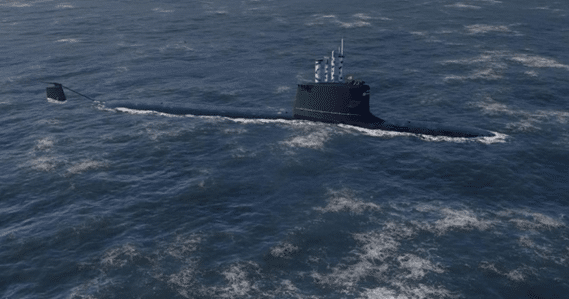
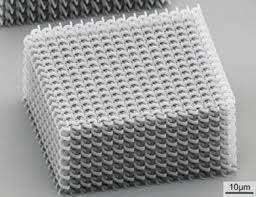
The METASUB project (Acoustic Materials for the Reduction of Submarine Signatures) is focused on implementing a methodology to obtain different configurations of panels, based on metamaterials, that improve the acoustic performance of the current panels on the superstructure of the Navy’s submarines.

SAES’s participation in METASUB focuses on the following areas: defining the configurations of interest for which the design, optimisation, and manufacturing will be customised, and defining the frequency ranges of interest for each application and the design objectives for the reduction of the electromagnetic signature.

Additionally, SAES participates in the definition and execution of a marine environment test to verify the real-world behaviour of a large object previously designed and manufactured, as well as in potential tests for acoustic and electromagnetic isolation and absorption at sea of a larger-scale sphere.

SAES was integrated in the international consortium that is developing the SEA Defence project (December 2020 to May 2023), chosen for grants in the EDIDP (European Defence Industrial Development Programme) 2019 call. EDIDP is the precursor programme in the field of technological development of the current European Defence Fund (EDF) focused on promoting innovation, research and technological development at all stages of the life cycle of defence products and technologies.

The consortium has been constituted by a total of 12 entities from eight European countries and coordinated by the Dutch DAMEN shipyard. SAES participated under the modality of Third-Party Related Entity of Navantia.

The SEA DEFENCE (Survivability, Electrification, Automation, Detectability, Enabling Foresight of European Naval Capabilities in Extreme conditions) project is aimed at providing the European Commission and the Member States with a complete and up-to-date roadmap on the technologies to be included in next generation naval platforms.

SAES participated in the project within Work Package 3 Lower Detectability, centred on identifying technological gaps and detailing the actions to be developed to counteract the threat created by the growing detection capacities of new sensors, both on the surface and underwater, and the ways to counteract that threat by means of reducing the detectability of naval platforms, on the basis of current and emerging technologies.

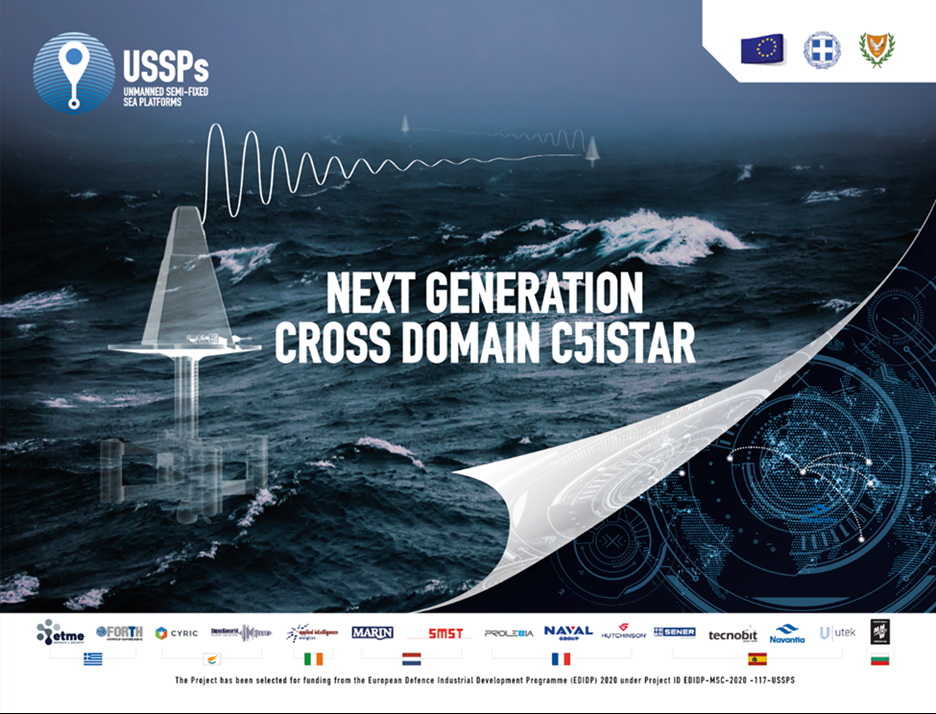
SAES is part of the consortium of European entities that is developing the USSPS (Unmanned Semi-fixed Sea Platforms) project selected by the 2019 European Commission call on the topic: Maritime surveillance generated by networks of sensors based on fixed and/or semi-fixed unmanned platforms.

The chosen consortium is made up of a total of 17 entities from seven European countries and is coordinated by the Greek entity ETME. SAES participates under the modality of Third-Party Related Entity of Navantia. The project has a duration of 42 months and is scheduled to finish in May 2025.

The project is focused on the development of a prototype unmanned platform which is highly autonomous, energy-efficient, based on miniaturised oil rig technologies and equipped with a wide range of air, surface and underwater sensors. This platform could be deployed in any geographical area, including in deep waters, and in adverse weather conditions, thus making it particularly versatile in its operations.

SAES’s participation is focused on integrating its DDS-03 Diver Detection Sonar and its associated DES system into the platform, to deter divers from approaching the protected area by emitting acoustic messages. SAES also participates in developing the requirements and in the design of the prototype of the complete system.