Diver detection for superyacht security.

Diver detection for superyacht security.

Publicado: 26/10/2017

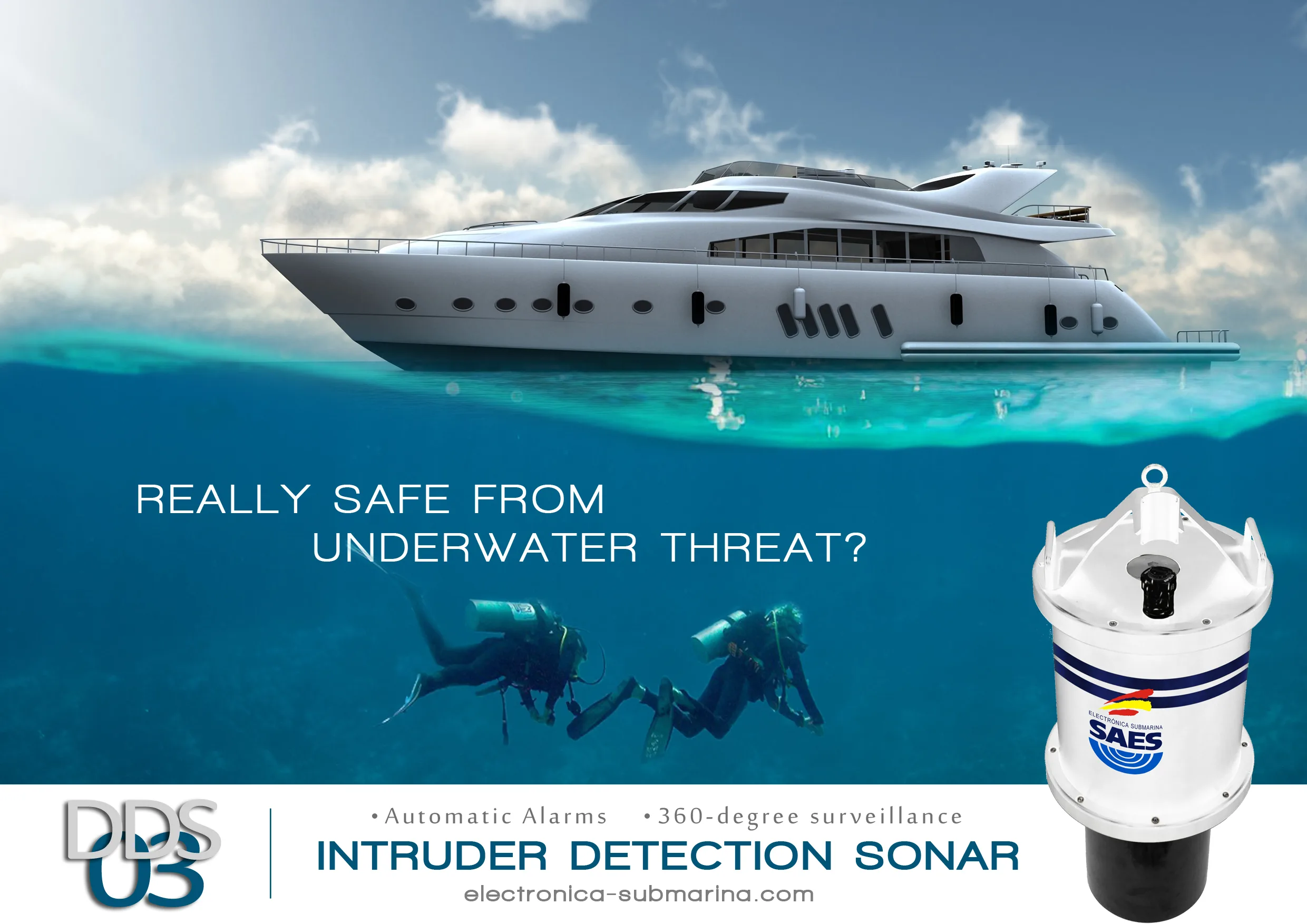
The DDS-03 of SAES will be promoted at Monaco Yacht Show (both QP45 belonging to Navantia), from the 27th to 30th September.

Download DDS-03 brochure


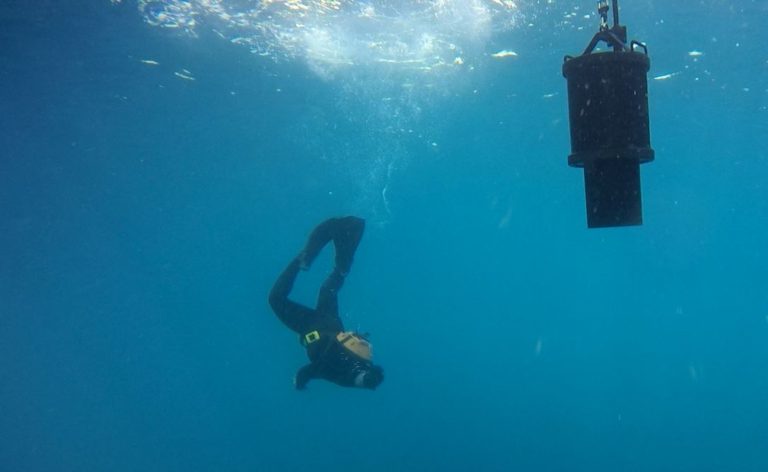
Last summer several media repeated the incident that occured in Ibiza: a football fan swimmed several kilometers up to the yacht where Lionel Messi was relaxing in Ibiza in order to meet him and make a photograph. What would have been happened if it would be a diver instead a swimmer and having not so innocent purposes?


This anecdote shows one of the threats that usually are not taken into account and that can endanger the tranquility on board. Although the solutions for superyacht security have advanced systems the underwater security is not always warranted since neither radar nor video cameras can detect a threat approaching to the ship underwater. This weakness can counteract by adding a diver sonar sonar to the surveillance system.


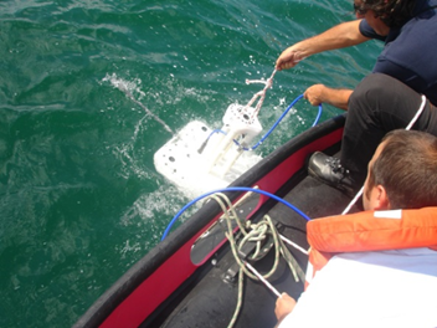
In order to have the superyacht completely protected, once anchored, the sonar is deployed over the side. Having done that, the system monitor constantly and automatically alerts if a underwater threat occurs, indicating the position, trajectory, distance and kind of threat: diver or underwater vehicle. Furthermore, the system allow cast a underwater message in order to dissuade the diver from approaching.

 seguridad yate de lujo / superyacht

Ports security

Using diver detection sonar for underwater surveillance in military ports where high value ships are anchored is a classic example of application of the system. The scenario is the same if the port is aimed at superyachts. In these cases, the DDS-03 deployment and the integration with the surveillance system will provide a totally superyacht security.


A responsive solution for difficult scenarios

Underwater diver detection is complex and depends on several conditions such as the water temperature and salinity. DDS-03 offers 360º coverage and has showed an excellent performance even in warm waters, where the sonar surveillance is not easy.

The use of this kind of sonars is becoming widespread for both military ships protection and critical infrastructures. Lately, divers detection is including in luxury market to offer a solid security solution.


Diver Detection Sonar at Monaco Yacht Show

As in the last edition of exhibition, SAES team will be at the show together to Navantia in which stand (QP45) a mock-up of the DDS-03 will be showed. Several meeting will take place in order to give advice about both superyacht security and ports, in order to be protected against divers.
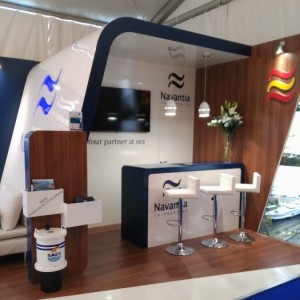
 

DDS-03-Superyacth-stand.jpg.


Participation in national and international consortia

SAES is part of the consortium responsible for delivering the NEREUS project, selected under the European Defence Fund (EDF) 2024 call. The consortium is composed of 24 organisations from one country and is led by Navantia. The project has a duration of 42 months and commenced in November 2025.

The objective of NEREUS (Naval System of Systems and Integrated Survivability of Future EU Platforms) is to establish the foundations for intelligent naval system-of-systems concepts for future European maritime platforms. These platforms are expected to operate in a fully integrated and interconnected manner within multi-domain environments, with a strong emphasis on survivability.

SAES’s contribution to the NEREUS project focuses on several key areas, including underwater sensors, underwater communications, signature management, combat cloud technologies and digital twin capabilities.

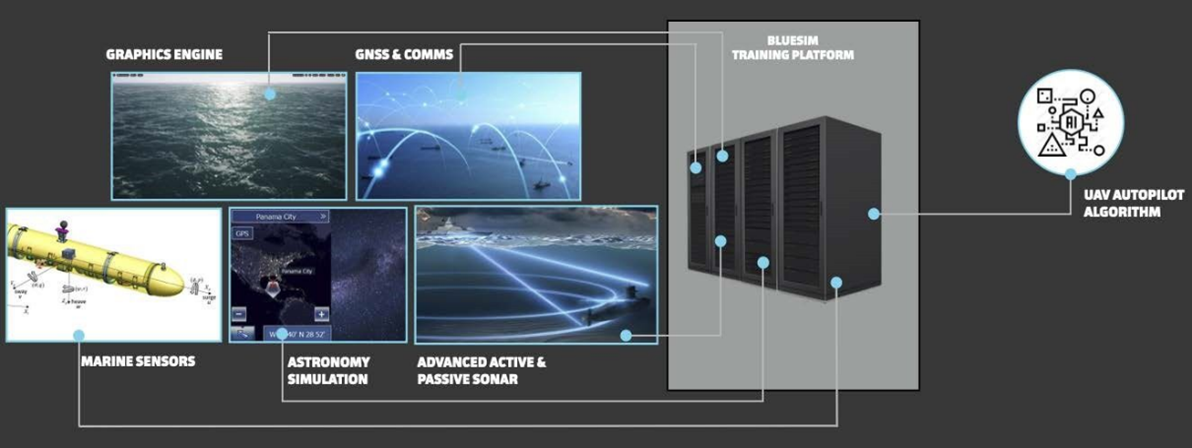
SAES participates as a member of the consortium developing the BLUESIM project, selected in the 2023 call of the Naval Sector PERTE by the Ministry of Industry, Trade and Tourism.

The consortium is composed of 5 national entities and is coordinated by the company Clue Technologies. Its completion is scheduled for June 2025.

BLUESIM (Synthetic Training Platform for Autonomous UxVs) focuses on the research of a new type of training architecture for Artificial Intelligence (AI) systems based on deep learning. The project targets two initial applications: the characterisation of a synthetic marine environment for deep learning and the representation of Unmanned Surface Vehicles (USVs) and Unmanned Underwater Vehicles (UUVs) with synthetic systems.

SAES will lead two work packages within this project, related to: Characterisation of the marine acoustic environment, in which it will simulate the acoustic environment adapted to the operational conditions of the UxVs, and Simulation model of acoustic sensors and their interfaces, in which it will simulate a Side-Scan Sonar (SSS) and a forward-looking sonar. Additionally, it will participate in other work packages related to activities such as requirements definition, system architecture definition, and integration and testing of the complete system.

SAES has participated in the development of the European SONORA project since November 2022; it was selected in the JPI (Joint Programming Initiative) 2022 call Oceans: Underwater Noise in the Marine Environment. The project has a duration of three years.

SAES participates as an entity subcontracted by the University of Alicante (UA) and the Polytechnic University of Valencia (UPV), which are both part of the consortium in charge of developing the project in conjunction with three Italian entities.

SONORA (thresholds assessment and impact beyond acoustic pressure level linked to emerging blue-growth activities), undertakes the assessment of quantitative thresholds related to behavioural and physiological impacts on fish, based on the relationships between acoustic pressure and particle movement, to evaluate the impact both variables exert.

SAES’s role in SONORA focused on carrying out measuring campaigns of sound pressure levels and particle motions, as well as analysing the data gathered.

SAES is part of the consortium led by the Centre for Naval and Marine Technology (CTN) selected by the CINEA (European Climate, Infrastructure and Environment Executive Agency) to develop the tender CINEA/2022/OP/0019.

ECOSS (European Catalogue of Sound Signatures) is focused on developing an open library containing a verified and continuously expanding digital catalogue, alongside an AI-based classifier for individual underwater sound signatures in shallow water marine environments

The project began in September 2023, and its completion date was set for January 2025. The consortium is composed of seven entities from five European countries.

SAES’s participation focuses on data collection and the choice of the AI-based algorithms, as well as on their training and testing.

SAES is part of the consortium developing the ePark+ project, selected for funding in the 2022 Science and Innovation Missions call by the CDTI, and which was supported by the Spanish Ministry of Science and Innovation. In addition to SAES, the following entities make up the project’s consortium:

  • Navantia (Coordinator)
  • ABANCE
  • ARISNOVA
  • EOLOS
  • PERSEO TECH

Participating as sub-contracted entities: Technical University of Cartagena (UPCT), AICIA (University of Seville), and FIDESOL.

This is a collaborative project which will contribute to the technological development of offshore wind power. It began in December 2022 and completed in January 2025.

The ePark+ project is focused on research and development of different digital technologies for the Support of Operations and Maintenance (O&M) in offshore wind farms. The project seeks to obtain a technological demonstrator of a Smart System for this function making use of unmanned vehicles, as well as developing a prototype to show its operation in a relevant and controlled setting.

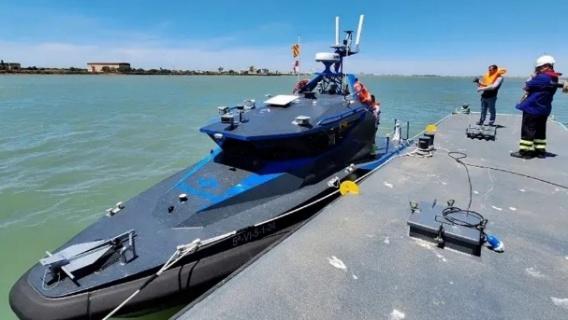
The system will consist of an Unmanned Surface Vehicle (USV), which will act as a mothership from which Unmanned Aerial Vehicles (UAVs) and Unmanned Underwater Vehicles (UUVs) will operate, as well as a remote-control centre where all the data received from the sensors on the unmanned vehicles will be centralised.

SAES’s contribution to the ePark+ programme focuses on underwater acoustic propagation and the surveillance of underwater infrastructures by means of sensors installed on the vehicles.

SAES’s participation in this project demonstrates the applicability of technology from the defence sector to the civilian sector, broadening the diversification of the applications of these dual technologies. In the field of unmanned systems, SAES is an expert in sensors in the field of unmanned vehicles to adapt them to other uses through the utilisation of artificial intelligence techniques..

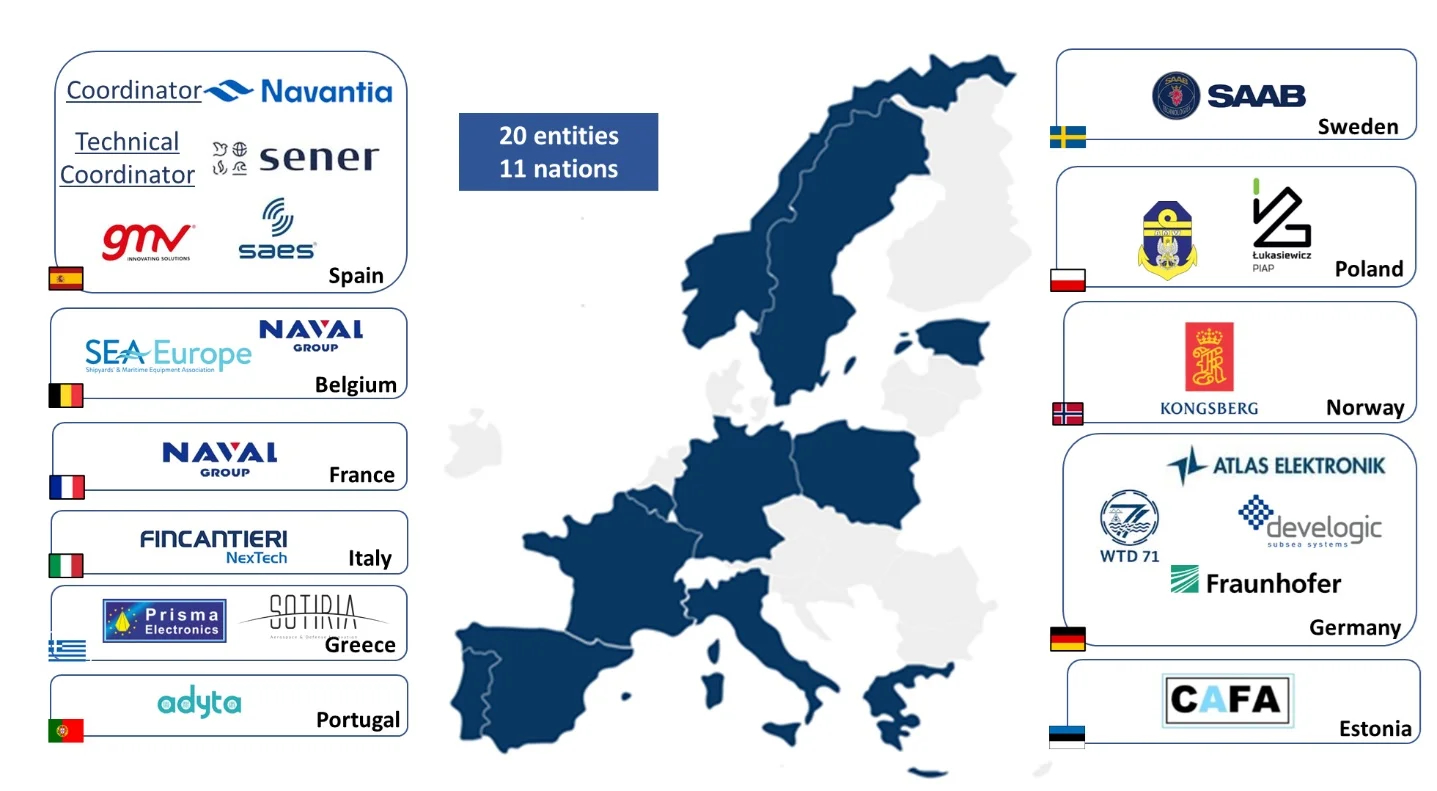
SAES is part of the international consortium developing the SWAT-SHOAL (Swarm and teaming operation of Manned & Unmanned Underwater Vehicle SHOAL) project, selected in the European Defence Fund (EDF) 2022 call in the area of Underwater manned-unmanned teaming and swarms.

SWAT-SHOAL, which began in December 2023, will run for 36 months. It its being developed by a consortium of 20 entities from 12 European countries, coordinated by the Spanish entity NAVANTIA.

The SWAT-SHOAL project is developing the concept of a system-of-systems that integrates different types of manned and unmanned assets as a swarm to achieve greater efficiency in underwater missions such as surveillance, reconnaissance, mine warfare, collaborative engagements, or supporting amphibious operations.

SAES’s participation is centred:

  • on leading Work Package 5 (WP5), focused on identifying technology gaps and defining future roadmaps to eliminate those gaps.
  • participating in the work packages related to: scenario definition and requirements capture, System-of-Systems requirements, platforms and components, communication technology.
  • participating in the work packages related to simulating the demonstration, preparation and execution of the sea demonstration.

SAES is part of the international European consortium developing the UnderSec (Underwater Security) project, selected in the Horizon Europe 2022 call in the topic of Underwater detection and control capabilities

The consortium responsible for the development of the project is composed of a total of 22 entities from 7 European countries and is coordinated by the German entity Fraunhofer. The project has a duration of 36 months, with and its scheduled completion is in October 2026.

A prototype system using a modular approach consisting of systems, sensors and robotic assets will be developed within the scope of the project for the surveillance of ships, ports and maritime infrastructures, and will include demonstrations in real operational settings.

SAES leads Work Package 3 (WT3) Protection technologies for continuous underwater surveillance, potential threats’ detection for early warning and deter actions. For this, SAES will develop a barrier of magnetic sensors for the detection of possible intruders and will provide its DDS-03 Diver Detection Sonar and its DES diver access deterrence system. Furthermore, it will participate in other work packages related to activities such as the definition of operational concepts, system integration, and prototype testing.

SAES has participated in the dTHOR project since December 2022, chosen in the European Defence Fund (EDF) 2021 call, in the category of Smart vessels, area: Digital Ship Structural Health Monitoring.

The project had a duration of 36 months and was developed by a consortium of 35 entities from 9 European countries, coordinated by the Norwegian entitiy SINTEF.

dTHOR (digital ship sTructural Health mOnitoRing) develops the next generation of a predictive structural health monitoring system for ships. This system is based on the innovative use of: large amounts of load and response measurements obtained from robust and advanced sensors, a digital environment compatible with recognised open standards for data exchange, and hybrid analysis and modelling, which combines physical and data-driven models.

SAES’s participation in dTHOR focuses on the areas of modelling, including the development of the ship’s vibration-noise transfer function, selection of sensors for acoustic signature acquisition, and management of underwater radiated noise.

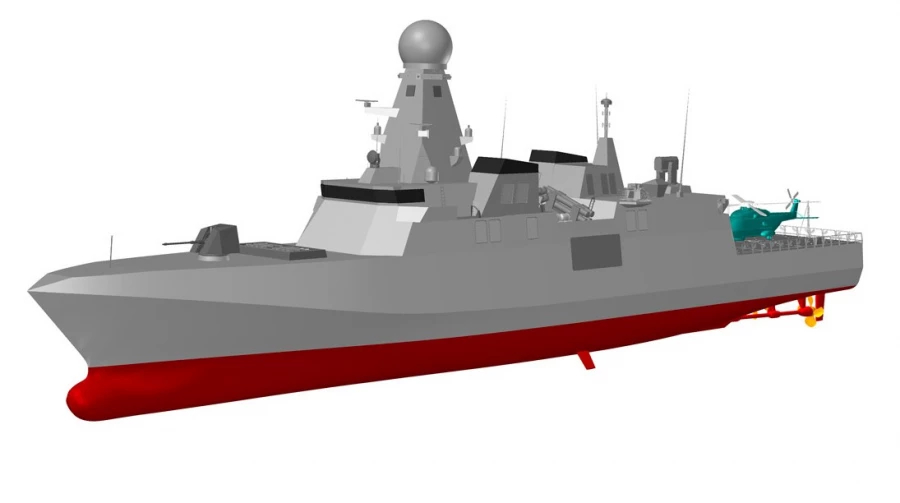
SAES is part of the consortium of entities developing the EPC (European Patrol Corvette) project, selected in the 2021 call of the European Defence Fund, in the category: Offshore patrol vessel, theme: Modular and multirole patrol corvette.

The EPC began in November 2023, has a duration of 24 months, and is being developed by a consortium of 35 entities (including beneficiaries, affiliated entities, and subcontracted entities) from 12 European countries, coordinated by the Franco-Italian entity NAVIRIS.

The EPC project is focused on the development of conceptual studies, up to the initial design, of a reference corvette-class ship, capable of carrying out a wide range of missions in future operational contexts. The design produced will lead to the development of a modular and flexible ship, more energy-efficient, more environmentally friendly and safe, and more interoperable and cyber-secure compared to current configurations.

SAES’s participation in EPC is focused on the active management of the ship’s multi-influence signatures, including:

  •  Measurement and analysis of the ship’s underwater signature.
  • Prediction and control of acoustic, electric, and magnetic signatures.
  • Acoustic noise monitoring system.
  • Digital twin for acoustic signature management and control.
  • Tool for evaluating the corvette’s detectability against naval mines.

SAES has participated in the development of the MIRICLE project (December 2021 to December 2023), selected for funding by the European Commission in the 2020 EDIDP (European Defence Industrial Development Program) call, under the theme: Solutions to detect, identify, counter, and protect against the threat of mines, including those operating at great depths.

The project has been developed by a consortium composed of 18 entities from 10 European nations and coordinated by the French entity Naval Group.

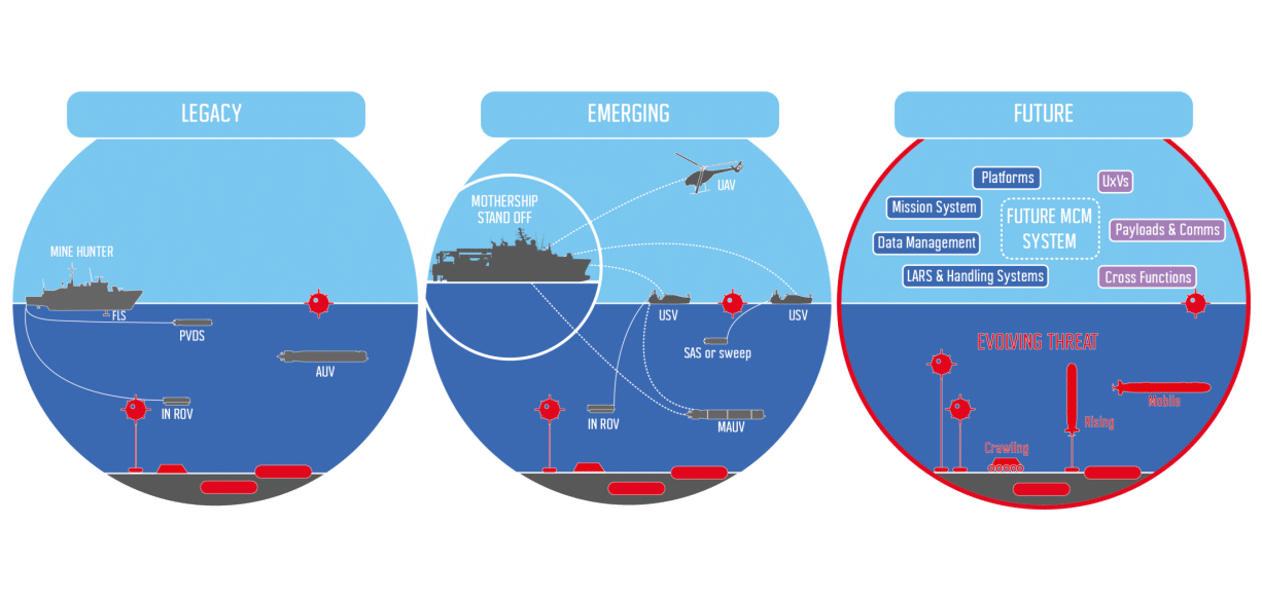
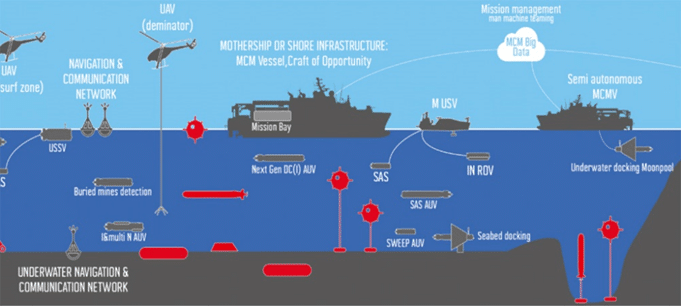
MIRICLE (Mine Risk Clearance for Europe) addresses the main components of an innovative mine countermeasure solution, such as: mission system, communication network, MCM (Mine Countermeasure) vessel, and robots, using Artificial Intelligence to support decision-making and leading to significant improvements in the execution of MCM missions. More specifically, it will enable European navies to benefit from the highest and most interoperable military mine countermeasure capabilities, in accordance with NATO recommendations.

SAES’s participation in the project is focused on two areas: reduction of electric and magnetic signatures, including the definition, design, development, and testing of an electromagnetic signature reduction system, and the study, analysis, and evaluation of the mine threat.

SAES had participated in the development of the METASUB project (November 2021 to November 2024), selected in the 2020 COINCIDENTE call (Cooperation in Scientific Research and Development in Strategic Technologies) by the Spanish Ministry of Defence.

The consortium responsible for the execution of METASUB was composed of the following entities: CTN (coordinator), Navantia, and SRG, with SAES participating as a subcontracted entity of CTN.

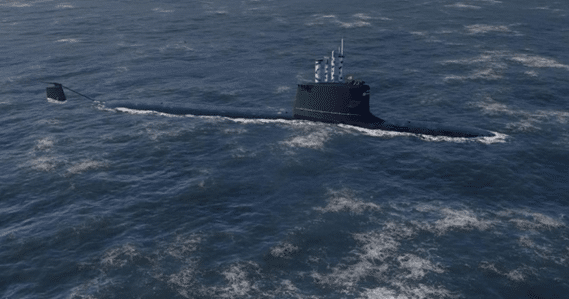
The METASUB project (Acoustic Materials for the Reduction of Submarine Signatures) is focused on implementing a methodology to obtain different configurations of panels, based on metamaterials, that improve the acoustic performance of the current panels on the superstructure of the Navy’s submarines.

SAES’s participation in METASUB focuses on the following areas: defining the configurations of interest for which the design, optimisation, and manufacturing will be customised, and defining the frequency ranges of interest for each application and the design objectives for the reduction of the electromagnetic signature.

Additionally, SAES participates in the definition and execution of a marine environment test to verify the real-world behaviour of a large object previously designed and manufactured, as well as in potential tests for acoustic and electromagnetic isolation and absorption at sea of a larger-scale sphere.

SAES was integrated in the international consortium that is developing the SEA Defence project (December 2020 to May 2023), chosen for grants in the EDIDP (European Defence Industrial Development Programme) 2019 call. EDIDP is the precursor programme in the field of technological development of the current European Defence Fund (EDF) focused on promoting innovation, research and technological development at all stages of the life cycle of defence products and technologies.

The consortium has been constituted by a total of 12 entities from eight European countries and coordinated by the Dutch DAMEN shipyard. SAES participated under the modality of Third-Party Related Entity of Navantia.

The SEA DEFENCE (Survivability, Electrification, Automation, Detectability, Enabling Foresight of European Naval Capabilities in Extreme conditions) project is aimed at providing the European Commission and the Member States with a complete and up-to-date roadmap on the technologies to be included in next generation naval platforms.

SAES participated in the project within Work Package 3 Lower Detectability, centred on identifying technological gaps and detailing the actions to be developed to counteract the threat created by the growing detection capacities of new sensors, both on the surface and underwater, and the ways to counteract that threat by means of reducing the detectability of naval platforms, on the basis of current and emerging technologies.

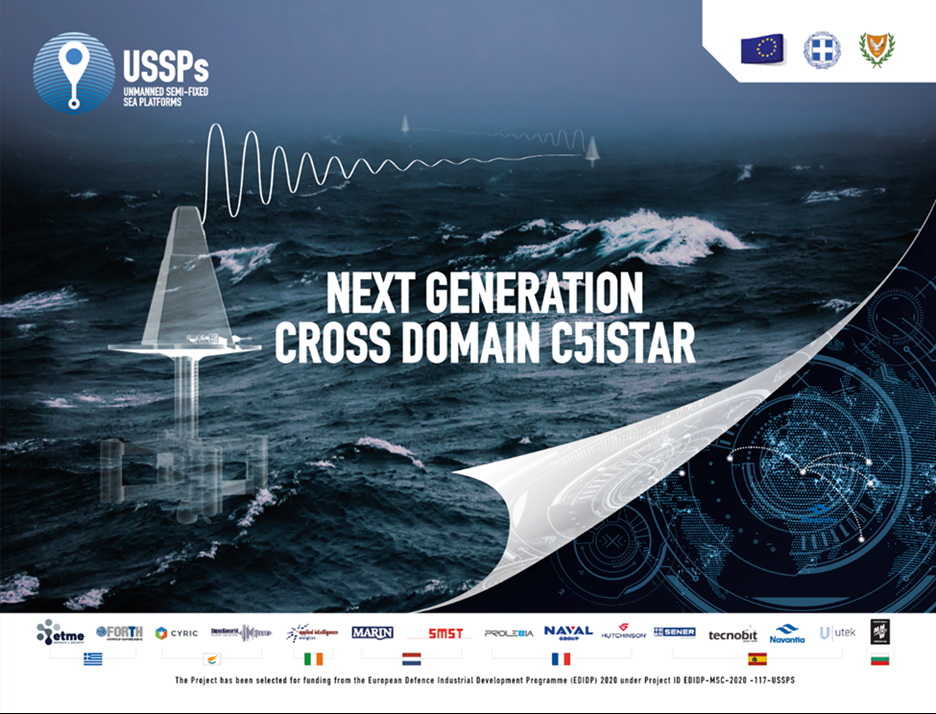
SAES is part of the consortium of European entities that is developing the USSPS (Unmanned Semi-fixed Sea Platforms) project selected by the 2019 European Commission call on the topic: Maritime surveillance generated by networks of sensors based on fixed and/or semi-fixed unmanned platforms.

The chosen consortium is made up of a total of 17 entities from seven European countries and is coordinated by the Greek entity ETME. SAES participates under the modality of Third-Party Related Entity of Navantia. The project has a duration of 42 months and is scheduled to finish in May 2025.

The project is focused on the development of a prototype unmanned platform which is highly autonomous, energy-efficient, based on miniaturised oil rig technologies and equipped with a wide range of air, surface and underwater sensors. This platform could be deployed in any geographical area, including in deep waters, and in adverse weather conditions, thus making it particularly versatile in its operations.

SAES’s participation is focused on integrating its DDS-03 Diver Detection Sonar and its associated DES system into the platform, to deter divers from approaching the protected area by emitting acoustic messages. SAES also participates in developing the requirements and in the design of the prototype of the complete system.